Tuesday, 30 October 2012

Using Saturation for effect


Some really cool concept art by Jannis Borgers using saturation to create depth in his images.


Using saturation in the creation of artwork.


This is an example by Xia Taptara of using colour saturation as a colour overlay to quickly and easily establish a colour scheme for her piece.


The image is from a tutorial for Photoshop I found interesting:
                      http://idrawgirls.com/tutorials/2011/10/31/photoshop-tutorial-overlay-mode-part-2/

Examples of Saturation variations


Saturation/Intensity/Purity

Saturation (or Intensity) refers to the colourfulness of a colour relative to its own brightness, a "pure hue" is achieved when a colour is not mixed with either black and white or grey. It is the intensity of a hue from grey, a highly saturated colour would contain little or no grey at all whereas a highly de-saturated colour would be mostly grey.


Friday, 26 October 2012

Value in artwork


In the water colour painting below, Cady Driver uses colour value to represent depth in her landscape. Lighter hues are used for distant objects whereas more prominent objects are dominated by darker shades.   


Below are the colour value exploration variants for  "Squonk's Hideout" by Mike Ocasio.


Cady Driver's Website: http://www.artbycady.com/index.html

Mike Ocasio's Blog: http://mikeocasio.blogspot.co.uk/


Value in film

I found it interesting looking at black and white movies for value examples. This image from Dracula (1931)  creates a dynamic contrast of values adding to the demonic nature of the character.


In this image from The Artist (2011), there is a larger variety of shades and highlights creating some interesting gradients and also highly contrasting  ares of the actors clothing.


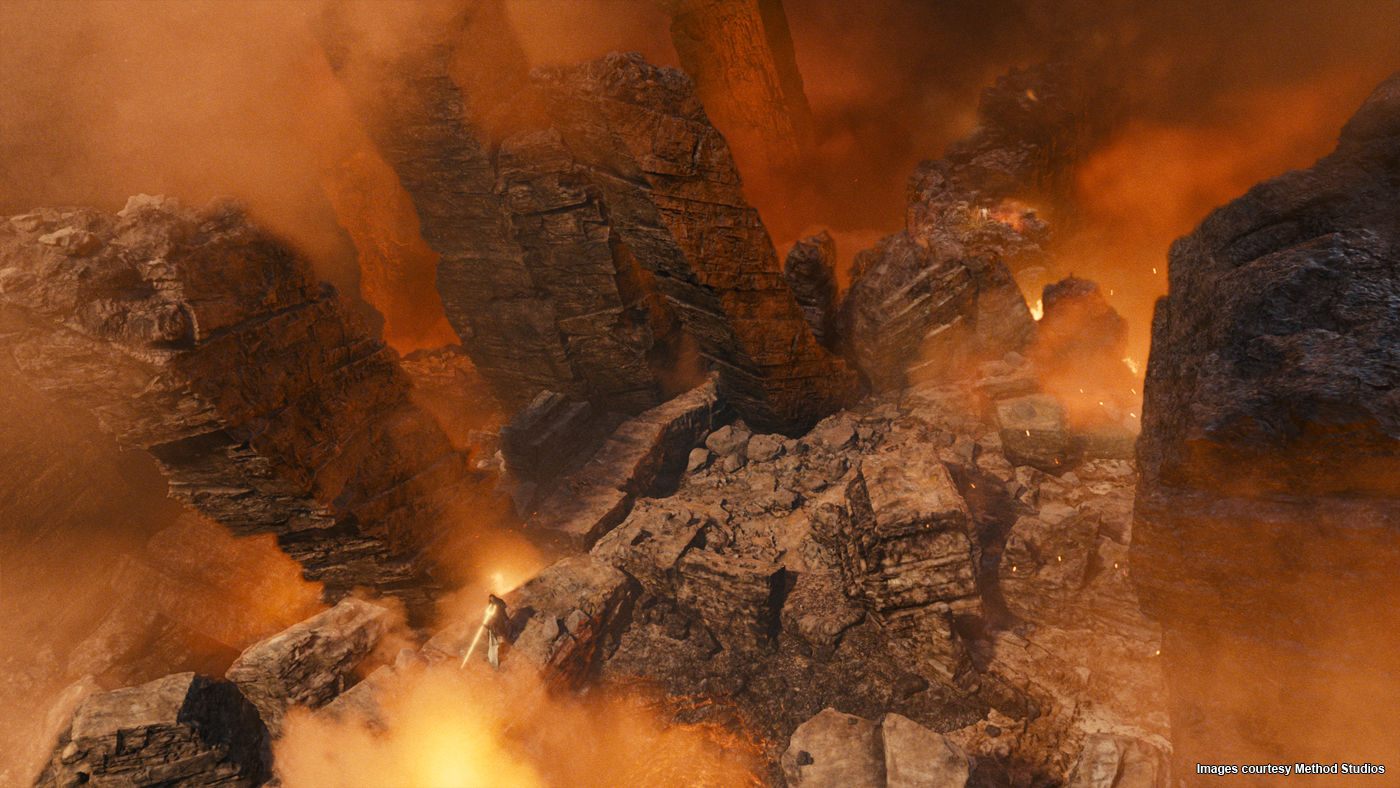
Colour Expression: Wrath of the Titans


Colour expression is used in this scene of Wrath of the Titans (2012) to convey aggression and heat, the hue intensifying in areas of extreme heat.


Colour Value and its uses


Value; the lightness (tint) or darkness (shade) of a colour. i.e. Navy is a dark value of Blue, whereas Cyan is a light value.


When producing artwork, value is used in many different ways such as representing the effect of light on an object (highlights or shadows), this helps create the illusion depth by using gradients. Value can also be used in a contrasting method to create emphasis in a piece; a dark figure in a light environment or like-wise a  light figure in a dark environment. 


Friday, 5 October 2012

Colour in Motion


Colour in Motion by Claudia Cortes
       "An interactive Experience of Colour Communication and Colour Symbolism"


Claudia Cortes's Colour in Motion is and interactive movie containing a collection of shorts exploring the nature and meaning of colour.


Colour Expression

Colour is a very powerful tool when expressing emotion in a piece if work. The interpretation of colour and its corresponding emotion is done partly through natural responses but is also governed by taught ideas. Commonly in the current age colours have a predicted emotive paring, red meaning angry, yellow meaning happy etc. The relation between emotion and colour has been assessed multiple times leading to the idea of colours not representing a single emotion but also having negative and positive traits.

The first to categorize colour in such a way was Johann Wolfgang von Goethe in his work “Color Theory” (Zur Farbenlehre 1808-1810), which present a slightly different perspective of colour meaning then what we know of today.


Claudia Cortes is another that has investigated the meaning of colour in a similar way.


Shirlet Willett's interpretation  outer ring containing positive traits, middle represents emotion and inner ring are negative traits.


outer ring containing positive traits, middle represents emotion and inner ring are negative traits


Basic colour concepts and Colour schemes

Colour is used in many different ways; to set a ambiance, invoke emotion, draw attention or for symbolic reasons. A correct colour palette can hugely impact the message you wish to portray and can bring deeper meaning to your works of art. There are a variety of colour combinations that can be used to enhance your desired theme such as Harmonious colours. There are several different types of harmonious colour sets including;


  • Complementary colours (opposing colours on the colour wheel to create an energetic outcome)

  • Analogous colors (three colours next to each other in the colour wheel that create a pleasant viewing experience and is usually found in nature.) 

  • Triadic colours (colours evenly spaced on the colour wheel in a triangle shape this also creates a fairly energetic mood) 


 All colours on the colour wheel can be split into two groups, warm and cool colours. This also plays an important part when deciding on a colour scheme. Warm colours create a vibrant, energetic atmosphere whereas cool colours are calm and relaxing.


Basic colour wheel displaying primary colours